
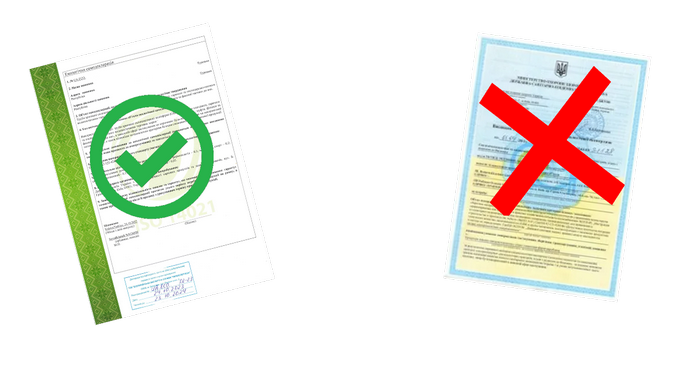
Our country is gradually moving forward in the issues of eliminating trade barriers with the European Union and the entire civilized world. Thus ended the long-standing history of another permitting document in Ukraine - the Conclusion of the State Sanitary and Epidemiological Expertise (or the Conclusion of the DSEE), known to many under such names as: the conclusion of the SEZ, SES, Sanepidemiological conclusion, the conclusion of the sanitary station, etc. This is due to the fact that from 01.10.2023 the Law of Ukraine of 1994, "On Ensuring the Sanitary and Epidemiological Well-being of the Population", lost its effect, and with it the need to issue such a conclusion disappeared.
Over the almost 30-year existence of the DSEE conclusion, it has become an integral part of the set of permits for products in many areas (light industry products, chemical products, materials in contact with food products, household products, building materials, pipes and materials for water supply, dishes, toys and much more).
In the context of sustainable development of technologies, deregulation and European integration processes of the Ukrainian economy, the sanitary conclusion has gradually lost its significance and relevance. And since this legislative requirement contradicts European approaches - it was completely abolished in 2023. A new law was adopted to replace the 1994 Law - the Law of Ukraine, "On the Public Health System Built on International and European Practices of Ensuring Public Health." Among other things, in order to prevent epidemics and mass diseases, an assessment of toxicological, epidemiological and hygienic properties is used. Interestingly, now compliance with the standards is not certified by state MSECs, but by independent laboratories accredited according to the international standard ISO/IEC 17025.
However, the state still retained the regulatory function of some types of products. However, this is justified if it is related to the most dangerous types of products for human health and the environment. In Art. 47 of the Law On the Public Health System - the following is stated; Chemical and biological hazardous factors are subject to state registration - chemical substances and substances of biological origin. State registration of chemical substances and substances of biological origin consists in entering data into the State Register of Hazardous Factors (hereinafter referred to as the State Register). It should be noted separately that not everything will be subject to state registration, there are many exceptions in the text. For example, disinfectants are registered, as before, in the unified state register.
In the conditions of the disappearance of the conclusions of the state sanitary and epidemiological examination from October 1, 2023, an urgent question has arisen - what document can certify the safety of products for users and the environment. Usually, the conclusion of the DSEE was required by tender documentation during public procurement, along with certificates and declarations of conformity, certificates for ISO management systems. According to many experts, an alternative to the conclusions of the DSEE should be environmental self-declarations in accordance with DSTU ISO 14021. An environmental self-declaration can be submitted by a manufacturer, importer, distributor or any person who wants to have certain advantages due to such statements. Environmental statements regarding products can be presented in the form of wording, symbols or images on product labels or packaging, or they can be submitted in product documentation. This practice has long existed in EU countries.
The general goal of environmental declarations is to provide verified, accurate and truthful information about the environmental aspects of products and services to contribute to the expansion of demand and supply of those products and services that have less pressure on the environment, thereby activating the potential for environmental sustainability of the environment. Typically, such confidence is based on test results that confirm the absence of toxic elements in the product, radionuclides and other elements that may be harmful to users and the environment. Therefore, given this essence, the environmental self-declaration should become a full-fledged replacement for sanitary certificates and can be a documentary confirmation of compliance with the requirements of current legislation in this area. We offer laboratory tests and preparation of environmental self-declarations in accordance with the requirements of ISO 14021 for our clients.
Do not risk your money - contact professionals!